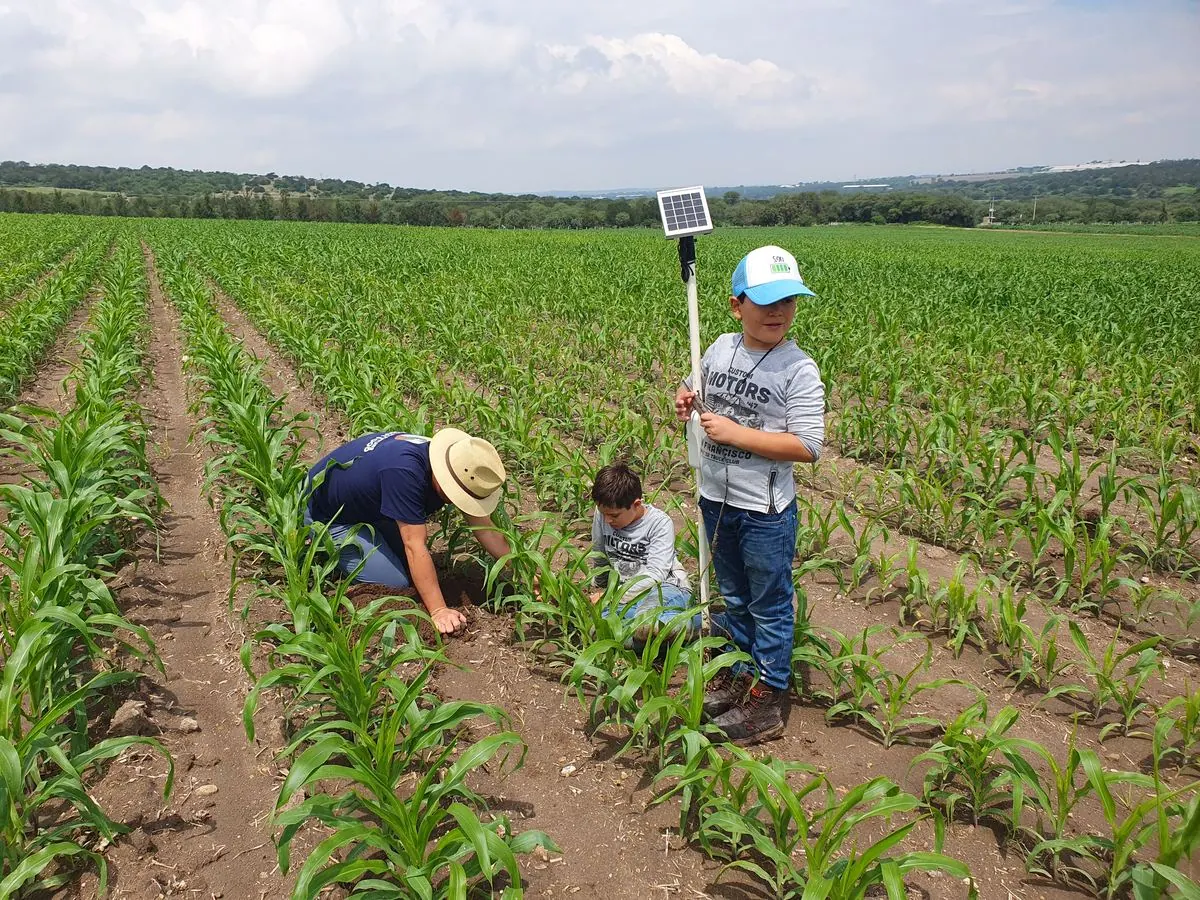
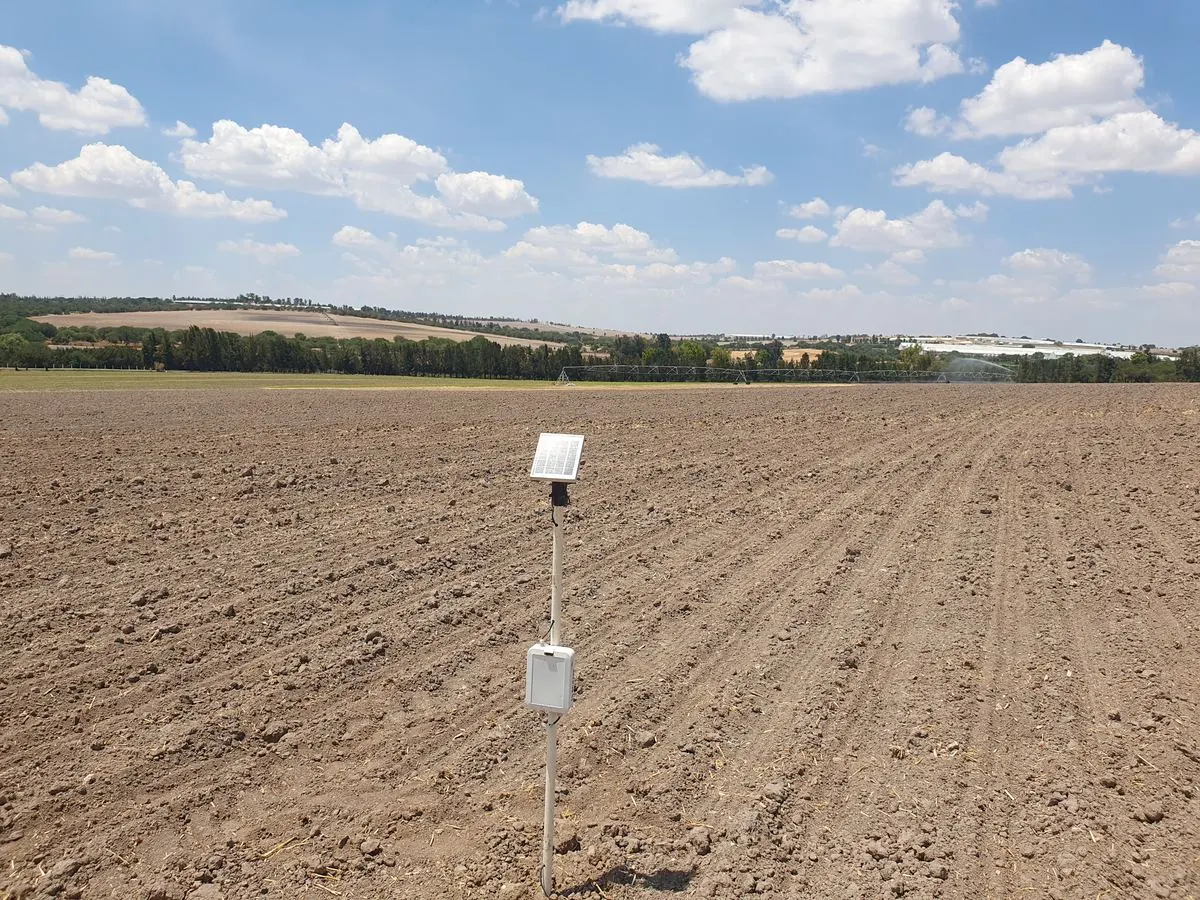
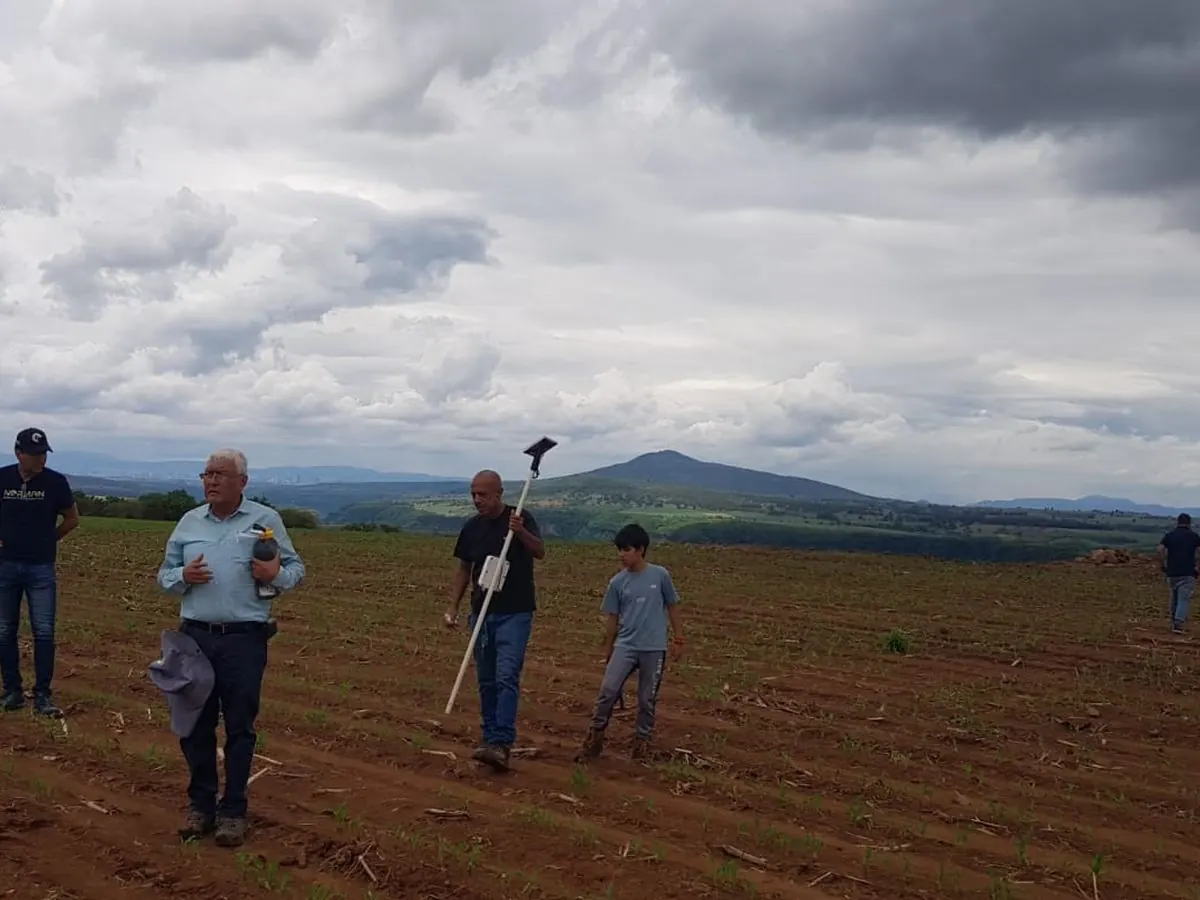
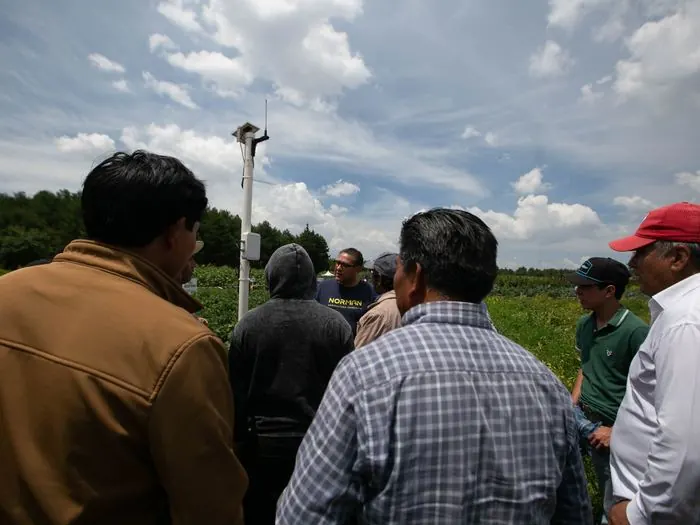
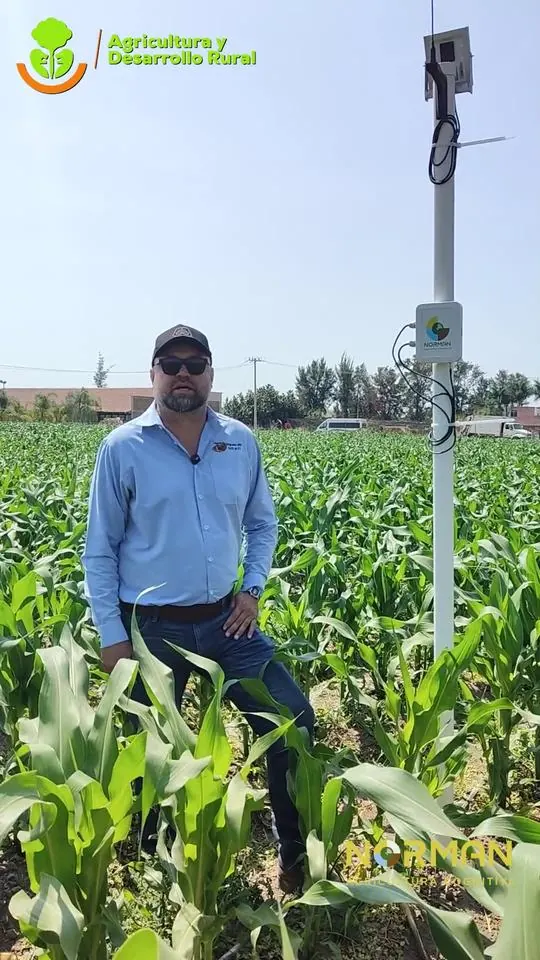
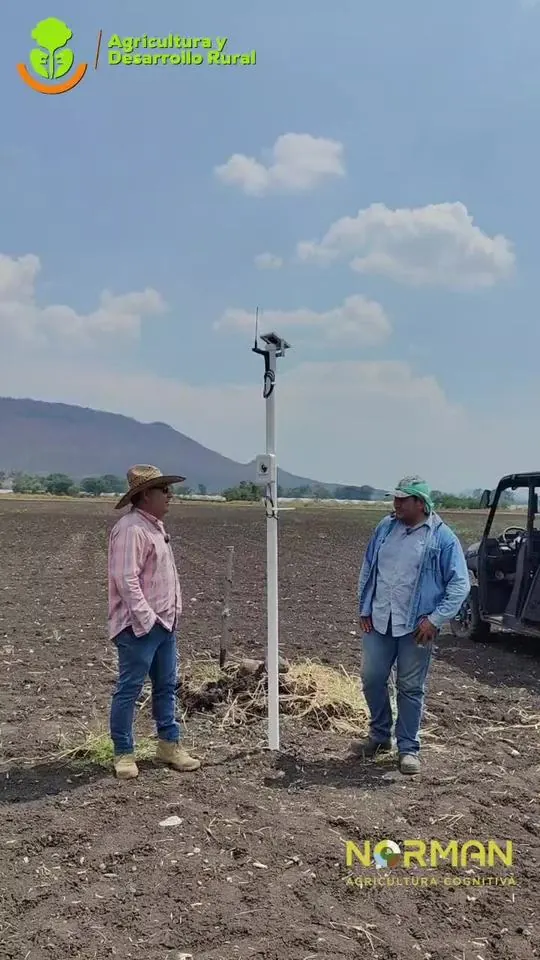
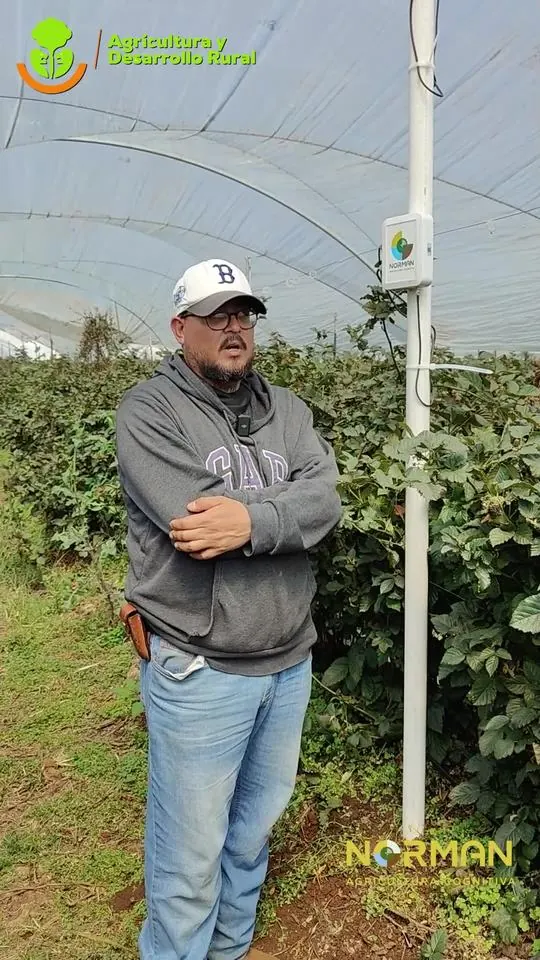
We use our own field monitoring stations and lab analysis to calculate each farm's Productive Capacity Index. We turn it into recommendations that help farmers make better decisions, and into evidence for those who invest in agriculture.
OOrganic matter: leaf litter and decaying residue10YR 2/1
AFertile topsoil, where roots live10YR 3/2
BSubsoil: accumulates clay and minerals2.5YR 3/6
CWeathered parent material2.5Y 8/4
RBedrock5PB 3/2
How to read a soil profileReal soil colors from the Munsell chart used by soil labs. In 10YR 3/2: 10YR is the hue (YR, yellow-red), 3 the value (0 black, 10 white) and 2 the chroma, or color strength.
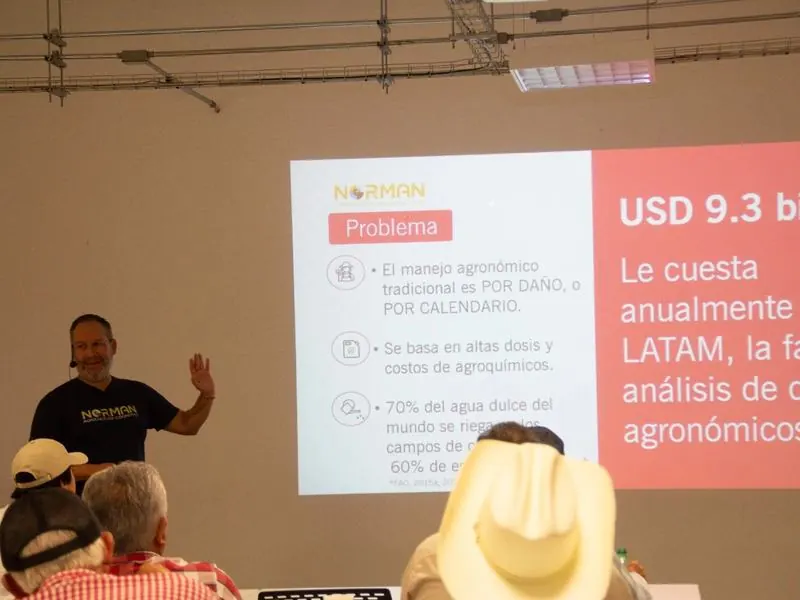
Artificial intelligence is already in the field, but it still runs on parameters from other latitudes, not from your farm.
AI agronomic analysis without context says little.
Artificial intelligence can analyze almost any data. But the same soil moisture means one thing in a sandy soil and another in a clay soil, one thing at flowering and another at harvest. For data to be useful, it has to be measured on the farm and interpreted in context. AI alone does not do that.
Every farm needs its own baseline.
Today's recommendations are calculated with tables built for other soils, other climates and other genetics. That is why we measure the potential of each farm and calibrate it, season after season, against its own harvest.
Measuring and interpreting only create value when someone can trust the result and act on it.
From the traditional cycle to the cycle with Norman
Traditional cycle
Cycle with Norman
Scroll or move your cursor over the image
The cycle
The cycle we are changing
In a traditional cycle, every year the farmer ends up deeper in debt and with poorer soil. With Norman, both margin and soil improve, and the transition becomes bankable.
The cycle we breakThe cycle we enable
Our mission is to make the regenerative transition of Mexican agriculture bankable.
Cognitive agriculture
Cognitive agriculture helps people understand agriculture through data measured and interpreted in context.
It helps farmers understand their farm and their business, so they can take back control of their land and make it more profitable.
It helps governments understand which programs deliver results and how to design better public policy, because they can see field data, from the region down to the farm.
It helps lenders understand whom to lend to and on what terms, because they can see the soil and management data of each farm, alongside the financial history of the person who works it.
It helps agribusinesses understand how to keep a supply chain that doesn't break, with the volume and quality they need, because they can see the data of every farm that supplies them.
It helps regenerative transition funds understand the impact of their investment, because they can see the data of each farm, season after season.
For the farmer, that understanding is built in four steps:
1234
1. Data from their farm
Measured in the field and in the lab.
2. Agronomic accounting
What the soil has, what the crop needed, what was applied and what resulted.
3. Economic accounting
What it costs to produce each hectare and what margin is left.
4. Better financial terms
With lower, proven agronomic risk, they can negotiate better financing.
“If you understand your agronomic accounting, you can improve your economic accounting.”
Miguel Trejo Luna · Head of Agronomy and Innovation, Norman
What we measure in the field becomes decisions for the people who move agriculture
1Farm baseline
Field survey, soil and water analysis, and the climate history of the site.
72of 100
Illustrative example
2Productive Capacity Index
How much of the farm's potential is being reached and what is limiting it, on a scale of 100.
3In-season monitoring
Our own field monitoring stations measure throughout the season and the index is updated.
100 is the expected productivity of that same farm.
Illustrative example
How far it is from its potential. Measured against what the farm itself can produce.
What is limiting it. Water, carbon, energy, nutrition, oxygen and root zone, in order of importance.
Support with agronomic management. Recommendations for each plot, with the reasons behind them, and someone who supports the farmer throughout the season. The farmer decides and their technician applies it.
With their margin in mind. Each recommendation weighs what the crop needs against what it costs to apply and what it can return at harvest.
At no cost to the farmer. It is paid for by whoever benefits from the data: the government program, the agribusiness, the lender or the fund.
A baseline for every farm
The program can measure how much each farm has changed since it joined.
A map of the region
Every measured farm is a point on the map. Together they show what limits production in each region (water, carbon, energy, nutrition, oxygen or root zone) and whether public policy improved it.
Water and aquifers
Water use and soil moisture data that inform decisions on irrigation and aquifer protection.
The data belongs to the farmer and the state
How it is used and where it goes are agreed in writing from the start.
Income statement backed by field evidence
Today lenders receive whatever the farmer declares. We deliver an income statement backed by what was measured on the farm: what was applied, when and why, and how that explains each cost and the margin.
Monitoring throughout the loan
The farm is monitored during the season, so the lender sees how it is doing before the payment date arrives.
A history, season after season
The same farm measured every season, to see how its management and margin perform over time.
What each supplier can produce
The baseline and index of every farm that supplies them: its potential and what limits it.
How the season is going
Monitoring of suppliers' management while the crop is in the field, to anticipate volume or quality problems.
How what they buy was produced
A measured record of what was applied on each farm, to answer to their buyer or to an export audit.
Suppliers that improve
A program farmers accept because it costs them nothing and it helps them, and that strengthens the weakest suppliers.
Impact measured farm by farm
Field evidence of what changed in the soil, water and management of each farm, instead of estimated impact.
Multi-year monitoring
The same farms measured season after season, with the same method, to report with comparable data.
Farmers ready to be financed
A portfolio of farmers with a baseline and monitoring, where capital can arrive backed by evidence.
Track record
Track record
Awards
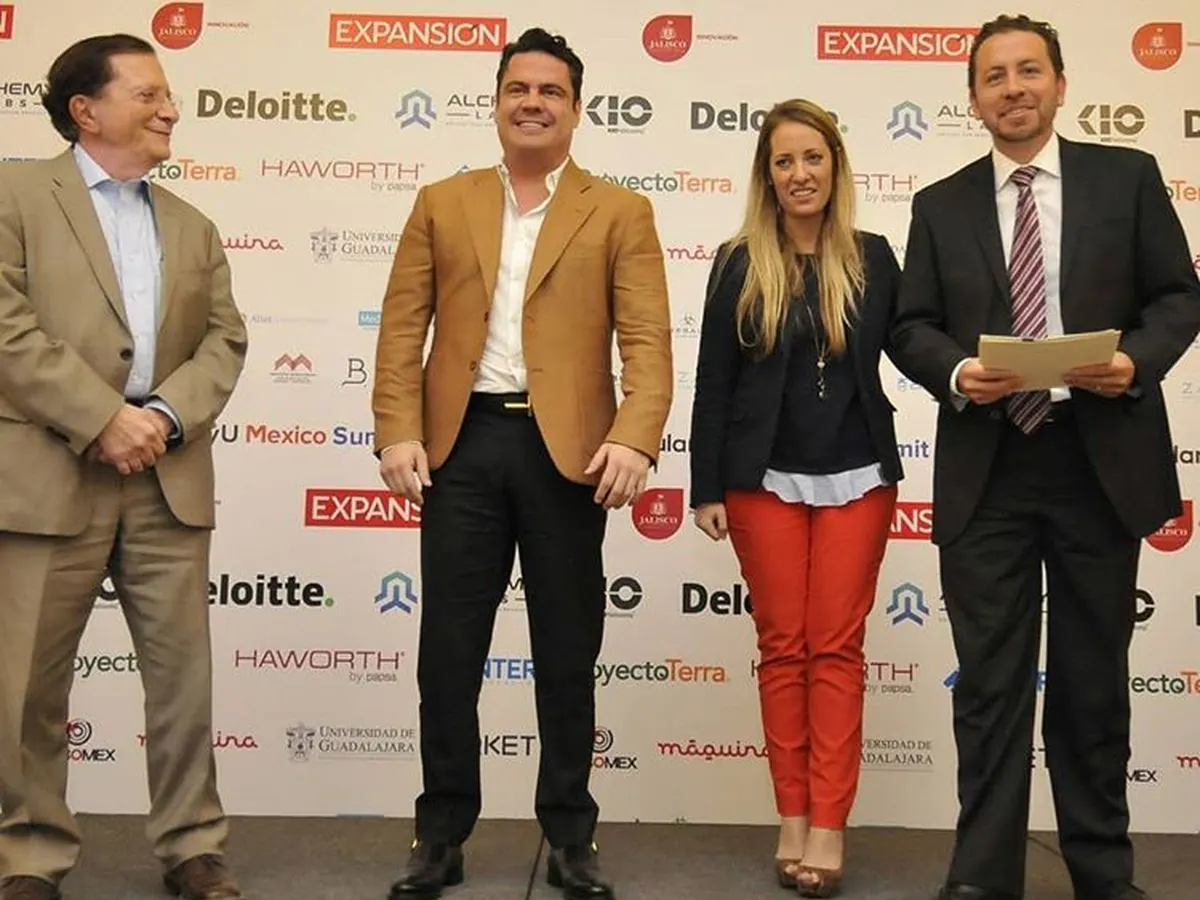
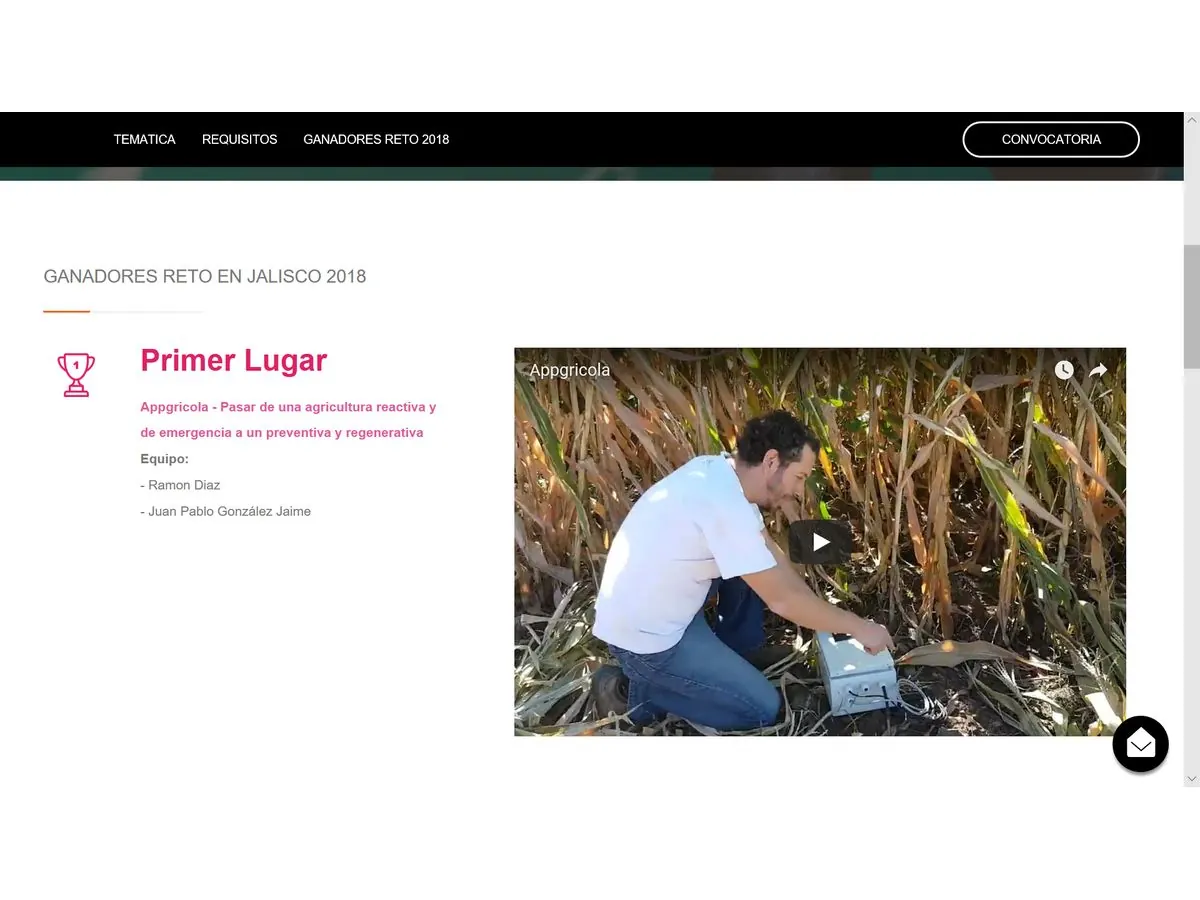
First place Jalisco Impact Challenge 2018, SingularityU Mexico Summit
Jalisco, October 2018. Challenge launched by the Jalisco Ministry of Innovation with Singularity University, the Silicon Valley organization focused on emerging technologies. First place for the project “Moving from reactive, emergency-driven agriculture to preventive, regenerative agriculture.”
First place CodeLaunch Mexico
Guadalajara, Jalisco, 2023. First international edition of CodeLaunch, the US startup competition produced by Improving.
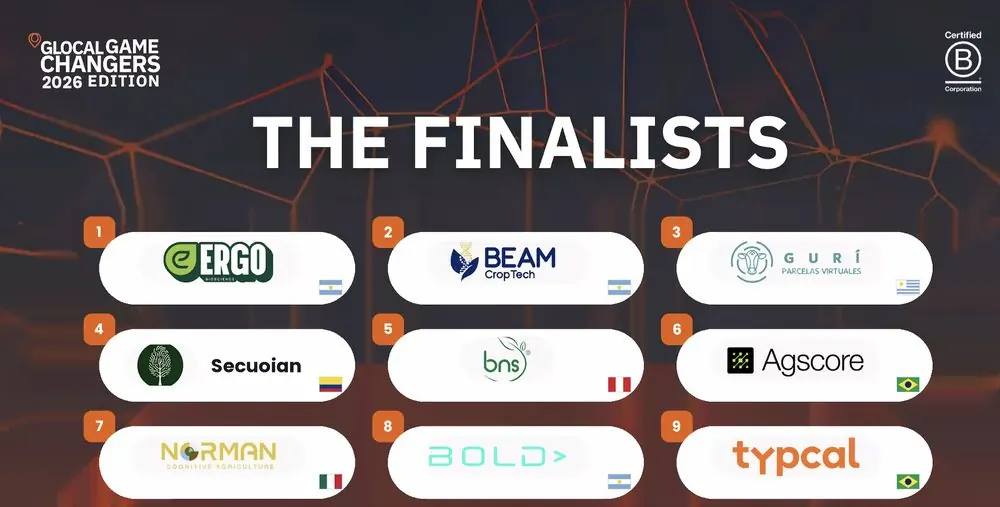
Finalists GLOCAL Game Changers LatAm
September 2026. Acceleration and investment program by GLOCAL, a fund specializing in Latin American agrifood and climate startups.
In the industry
Swipe to see more
October 21, 2026
Speakers Yucatán Tech Week 2026
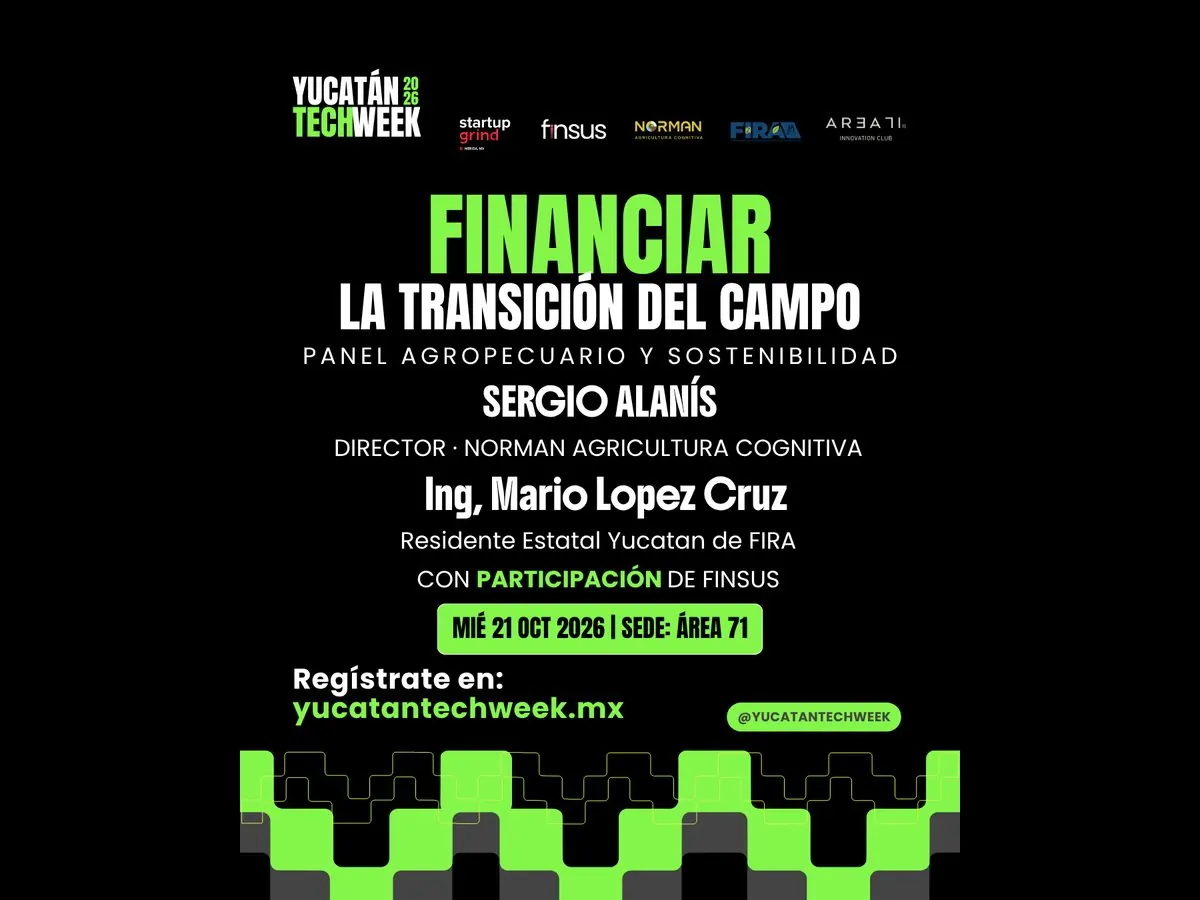
Mérida, Yucatán, Área 71. Agriculture and sustainability panel “Financing the transition of agriculture,” with Mario López Cruz, FIRA state representative in Yucatán, and the participation of Finsus. yucatantechweek.mx
October 15, 2026
In the media Mexiquense Noticias
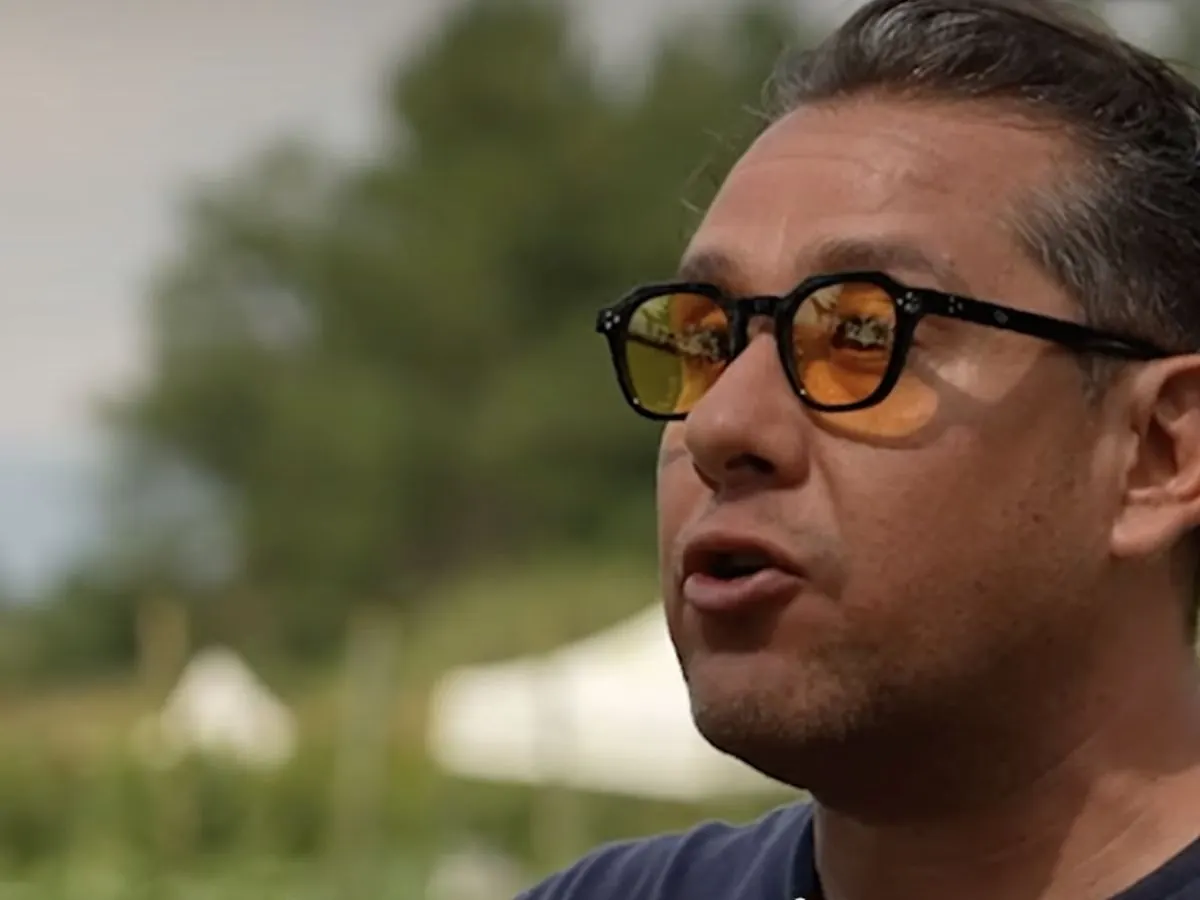
State of Mexico. A report on how ICAMEX is driving research and new technologies for the state's priority crops (corn, green fava beans, nopal cactus and amaranth), featuring its director general, Everardo Lovera Gómez, and Raúl Martínez Trejo Luna, from Norman: “Farmers have a lot of knowledge, but sometimes they just lack the tools for what they can't see: the soil and the atmosphere.” Watch the reel on Facebook
September 2026
Case presented CBTa 96, National Corn Day
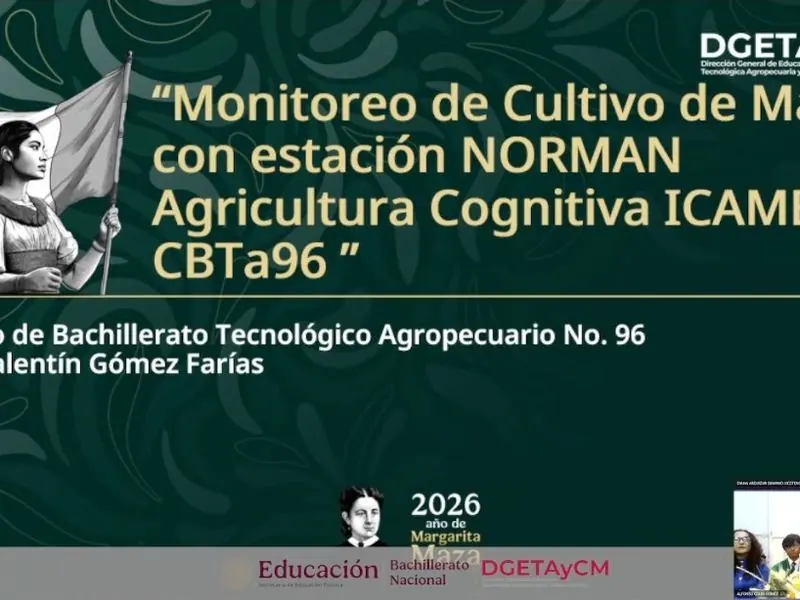
Xalatlaco, State of Mexico. Agricultural Technical High School No. 96 presented the monitoring of its corn crop with the Norman station installed with ICAMEX, in the DGETAyCM broadcast. Watch the broadcast
September 2026
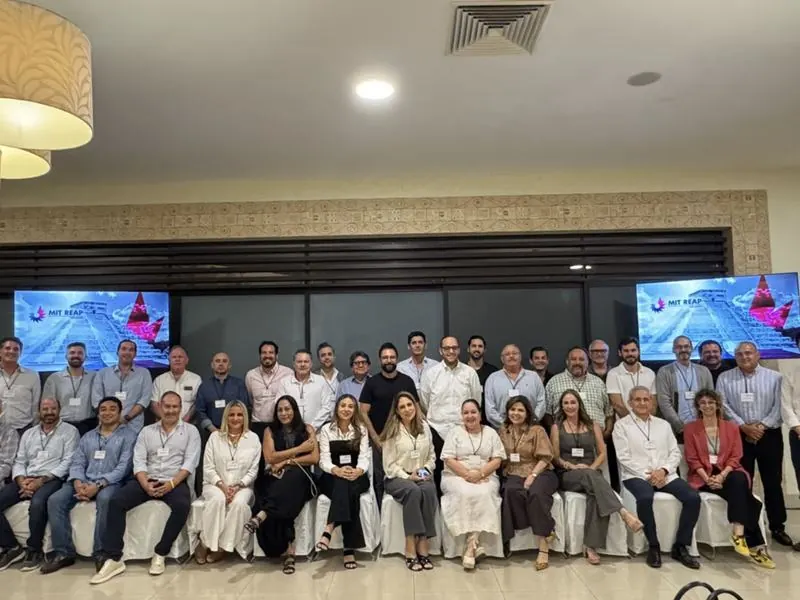
Participants MIT REAP Yucatán
Yucatán. We take part in MIT's Regional Entrepreneurship Acceleration Program, which in Yucatán brings together universities, government, companies, investors and entrepreneurs (2025–2027 cohort).
May 12–14, 2026
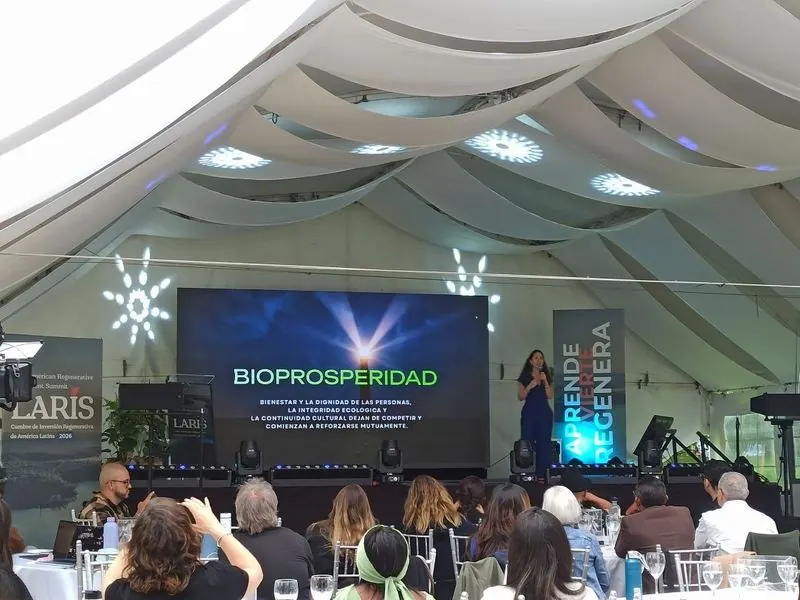
Attendees LARIS 2026
Bogotá, Colombia. Latin American Regenerative Investment Summit, bringing together impact investors, foundations, banks, funds and governments to mobilize capital for the region's regenerative transition.
February 23, 2026
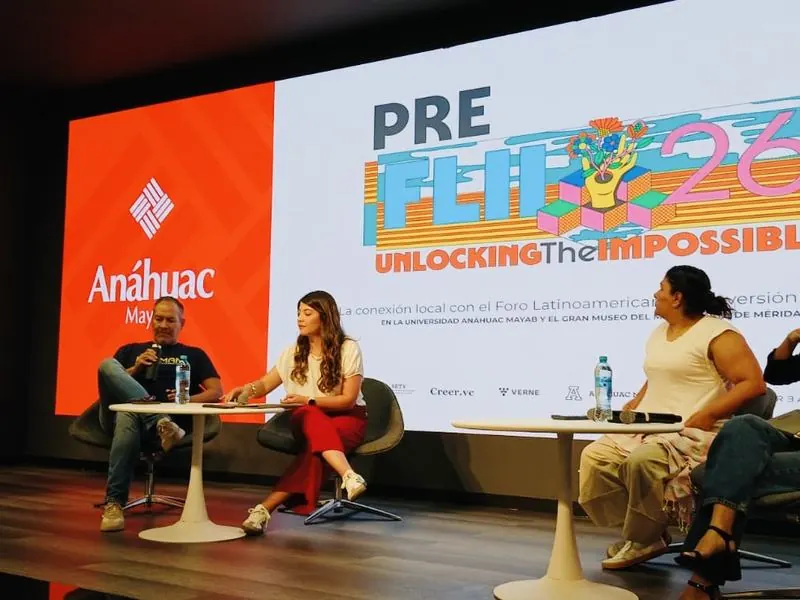
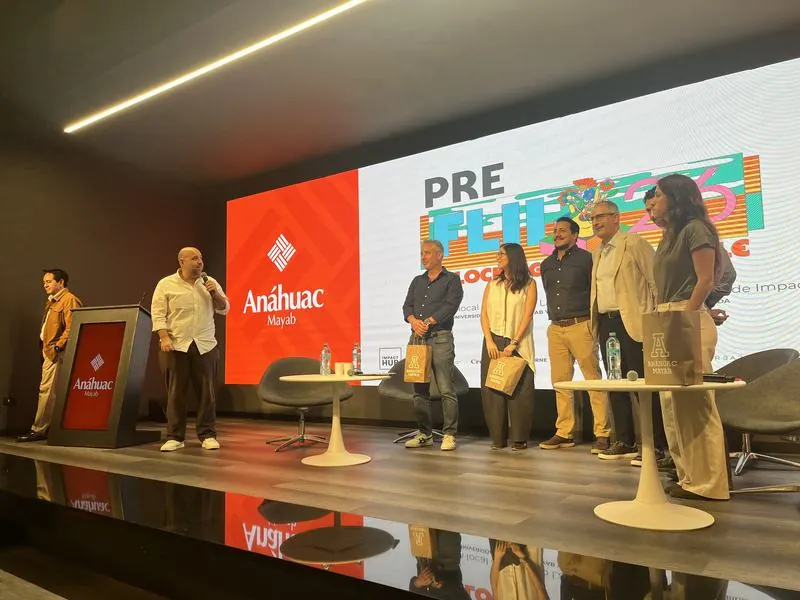
Speakers Pre-FLII 2026
Mérida, Yucatán, Universidad Anáhuac Mayab. Panel “Companies that change the world: social and environmental impact through entrepreneurship,” ahead of the Latin American Impact Investing Forum, moderated by New Ventures.
October 2025
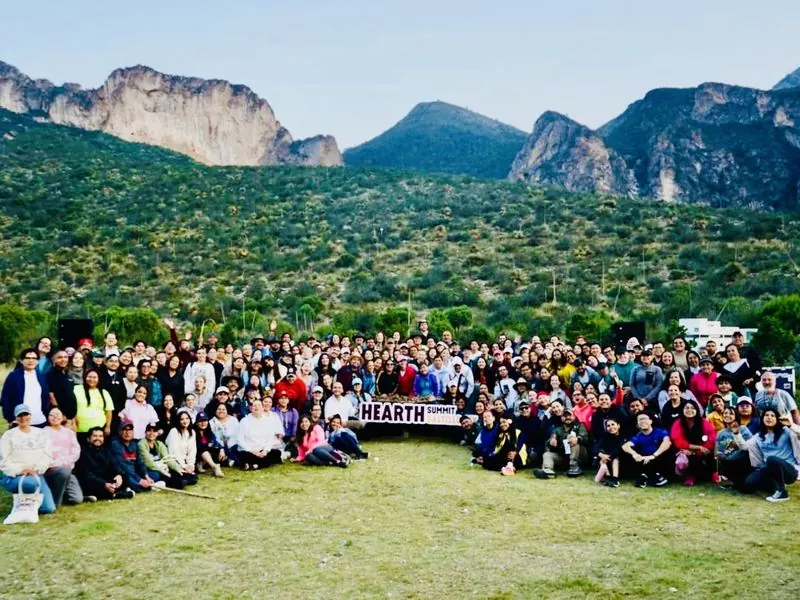
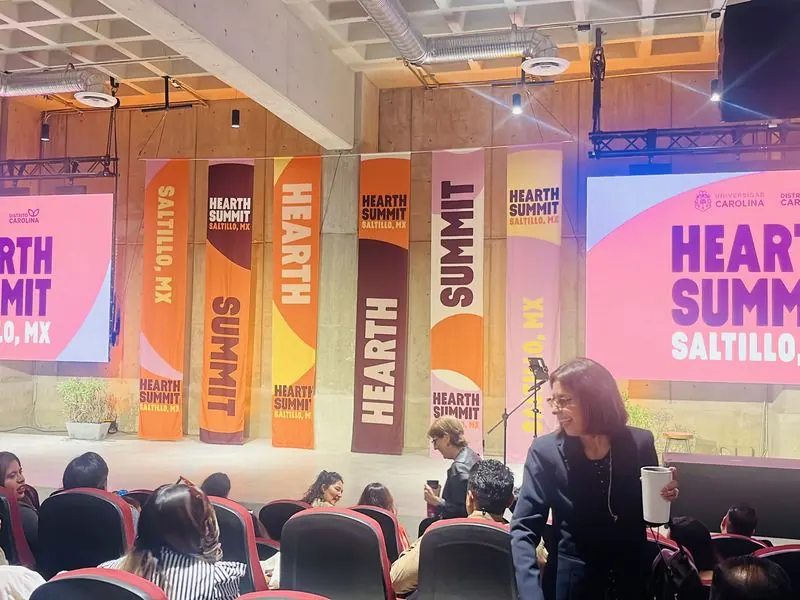
Participants Hearth Summit Saltillo 2025
Saltillo, Coahuila, Universidad Carolina. Regional gathering of The Wellbeing Project, “From the heart to action,” on wellbeing, education and collective action.
March 10, 2025
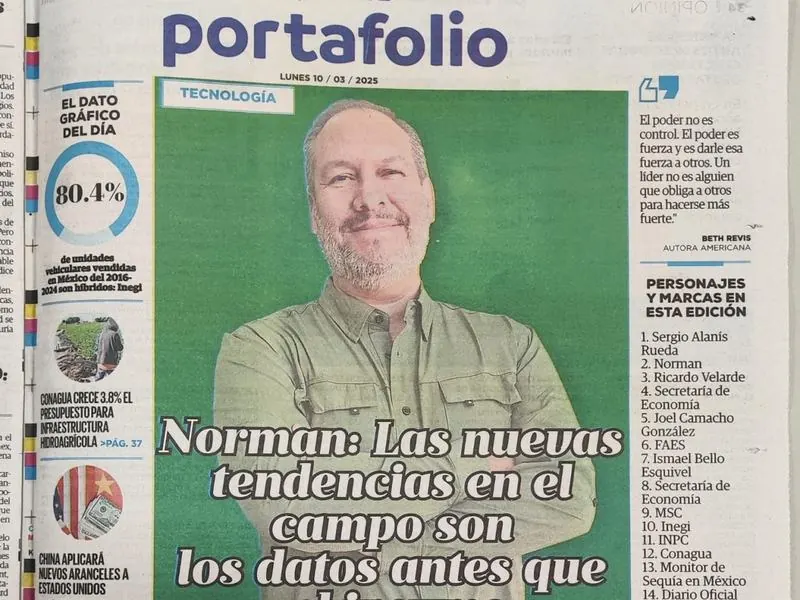
In the press El Debate
Cover of the Portafolio section: “Norman: the new trend in agriculture is data before inputs.”
March 4, 2025
In the media Revista Comentarios
Sergio Alanís, CEO of Norman, on podcast episode 74: “Smart crops: the agriculture of the future.” Watch the episode
February 13, 2025
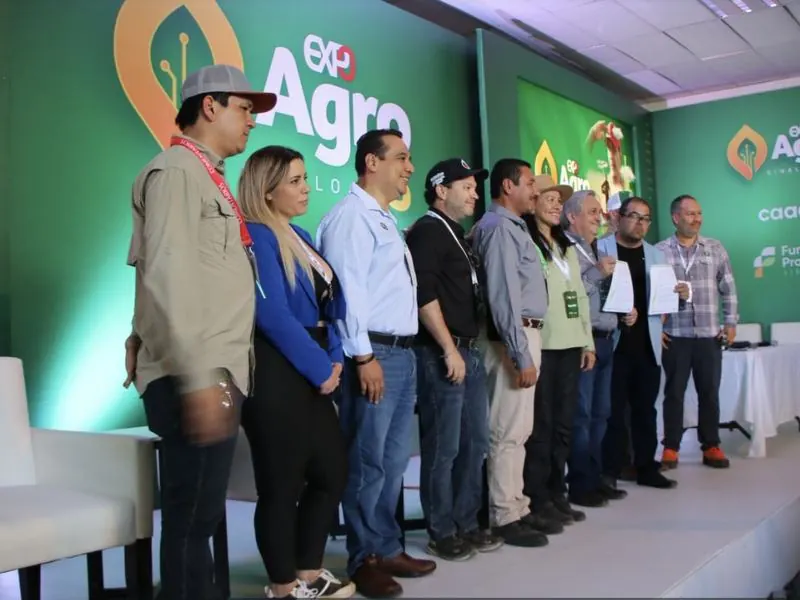
Signatories Sinaloa Commitment to Sustainable Agriculture
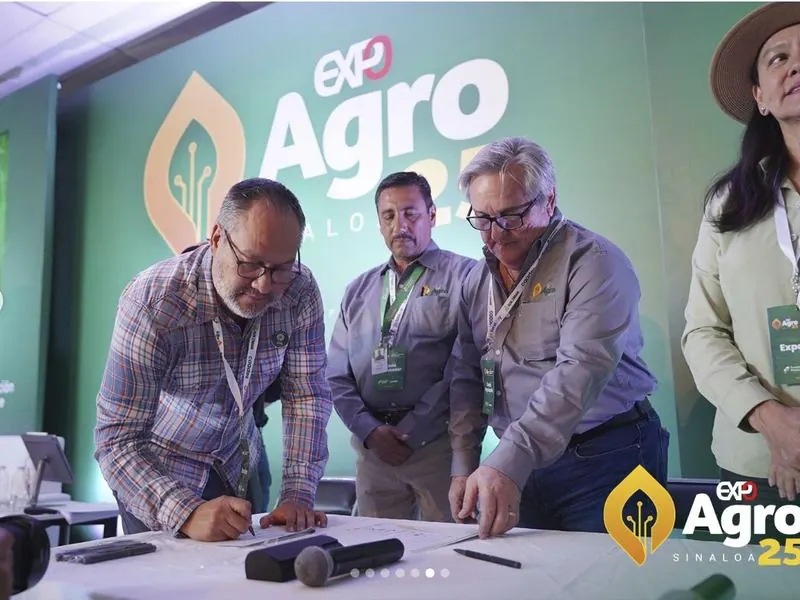
Expo Agro Sinaloa. Norman signed, together with CAADES, the Culiacán River Farmers Association, Fundación Produce Sinaloa and other organizations in the sector, the commitment to sustainable, inclusive and innovative agriculture.
February 12, 2025
Speakers Expo Agro Sinaloa 2025
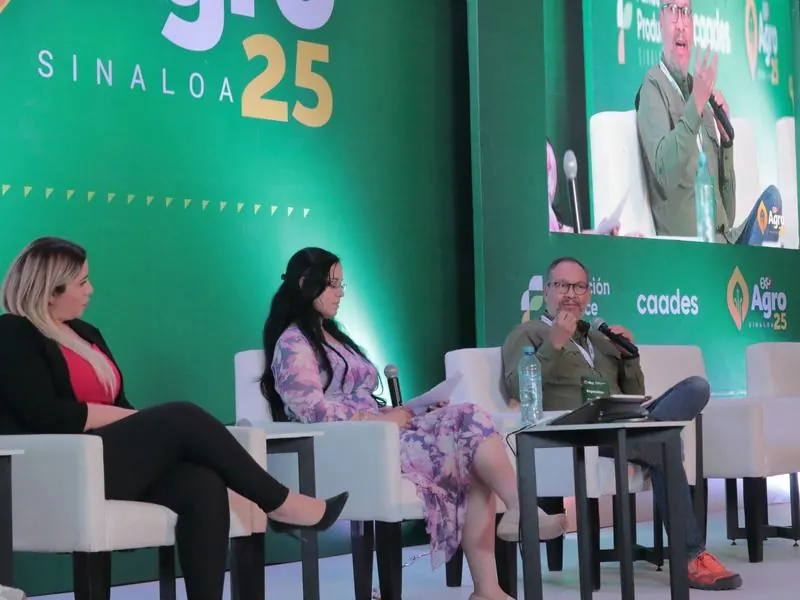
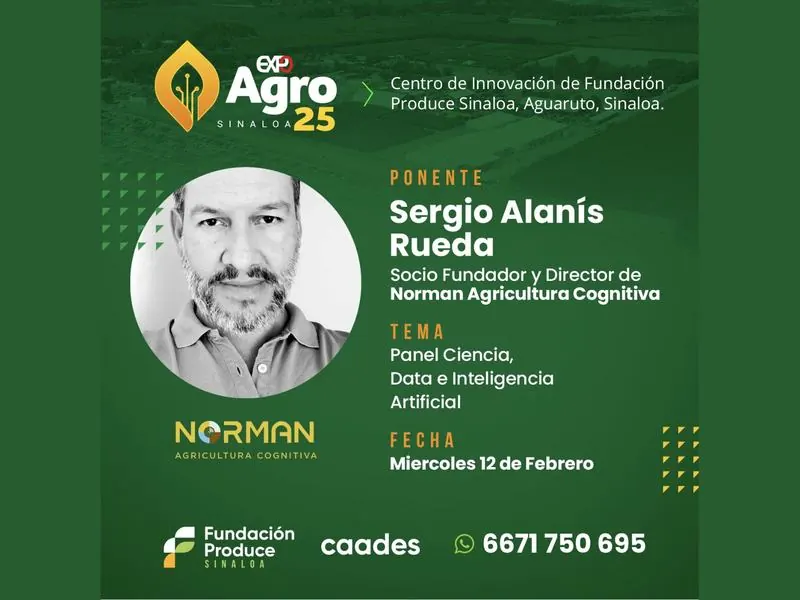
Culiacán, Sinaloa. Panel on Science, Data and Artificial Intelligence at the Fundación Produce Sinaloa Innovation Center, with CAADES.
July 2024
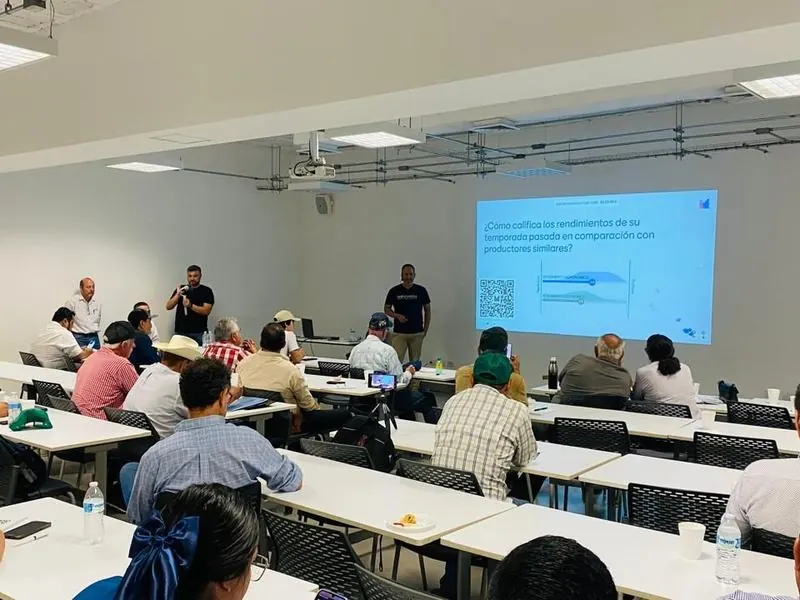
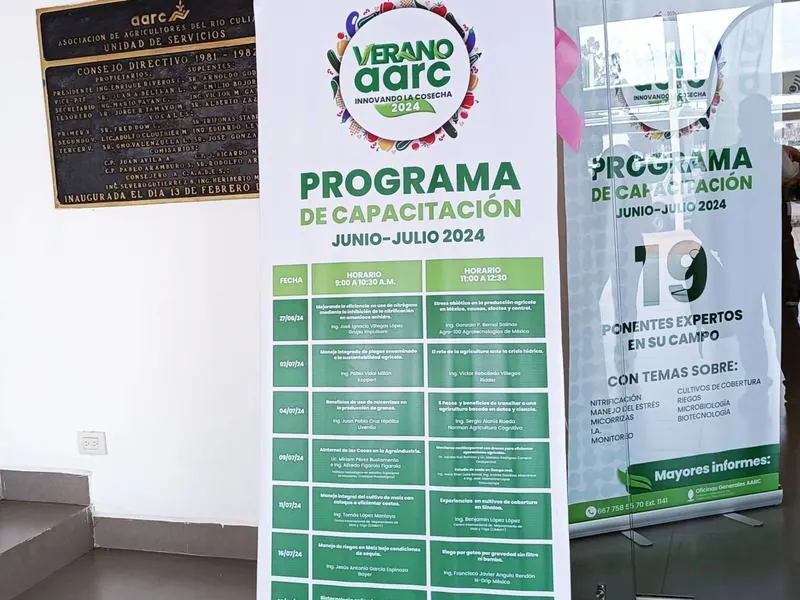
Speakers Verano AARC 2024
Culiacán, Sinaloa. Training program of the Culiacán River Farmers Association for its farmers.
March 19–20, 2024
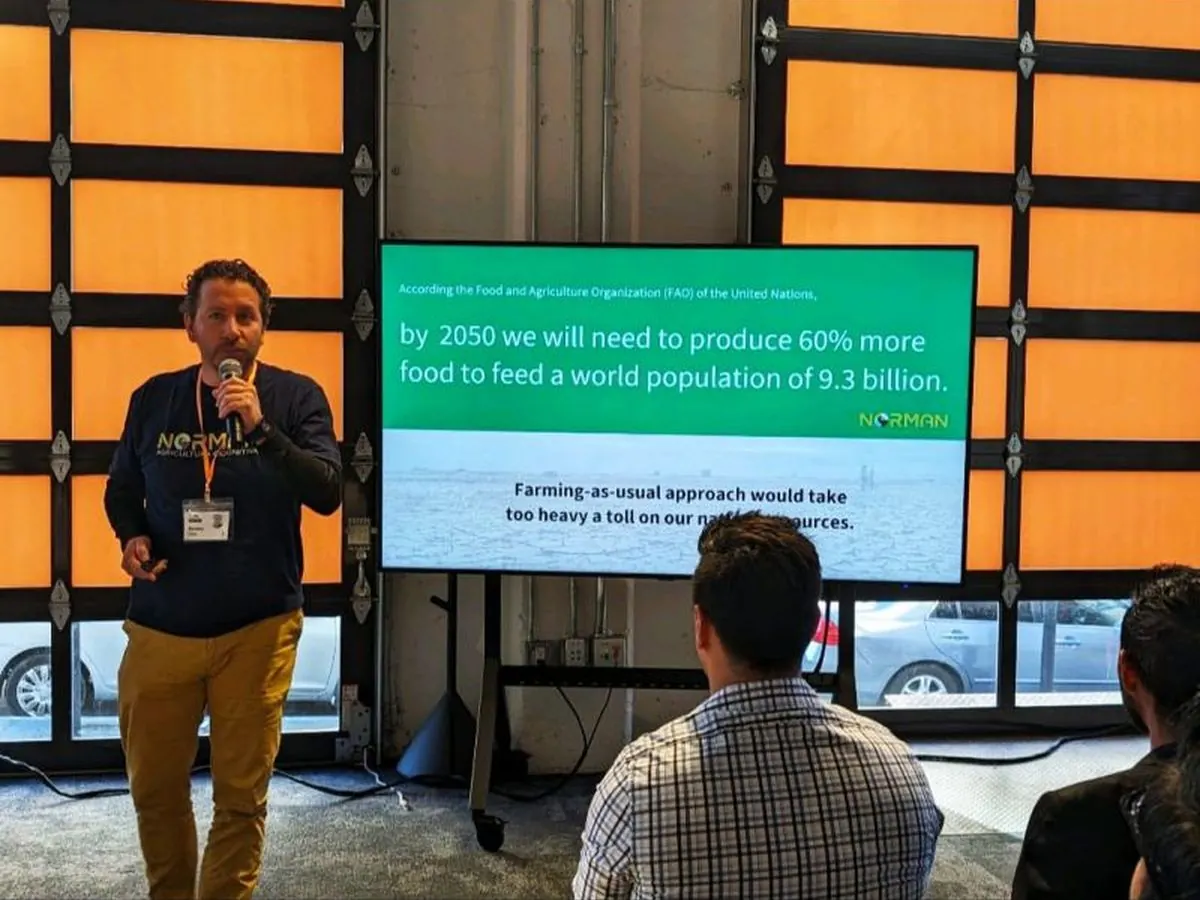
Presentation World Agri-Tech Innovation Summit
San Francisco, California. Ramón Díaz presented Norman at the summit that brings together more than 2,500 leaders, investors and companies developing technology for the agrifood chain.
August 10, 2023
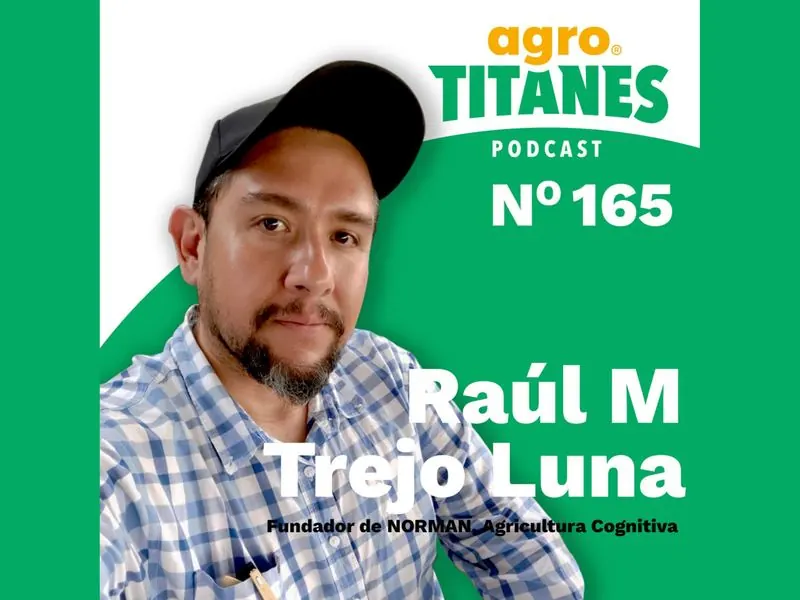
In the media Agrotitanes Podcast
Raúl Martínez Trejo Luna, from Norman, on episode 165: “Unlearning traditional agriculture.” Listen to the episode
Projects and partners
Soil moisture monitoring in forage corn · COECYTJAL
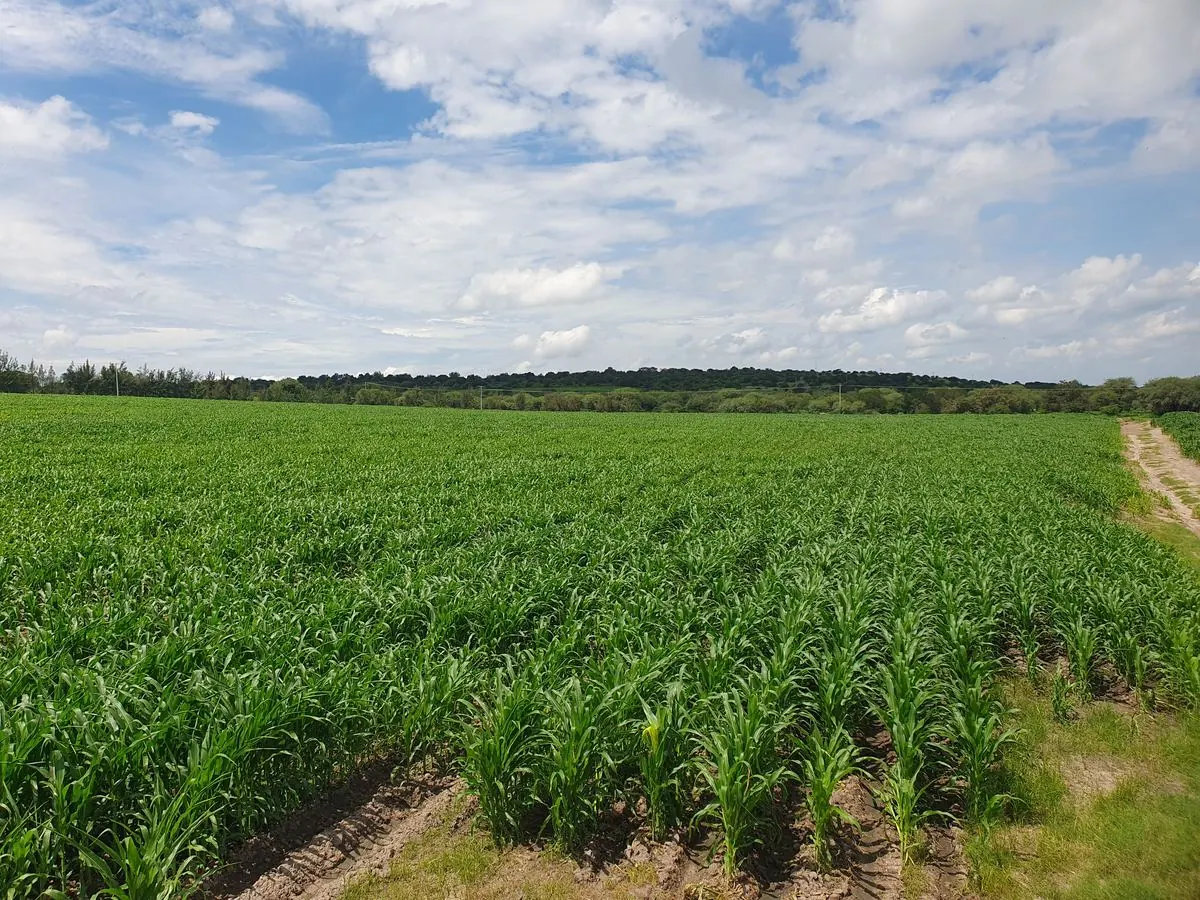
Los Altos de Jalisco, spring-summer 2023 season. Project supported by the Jalisco State Council for Science and Technology, with CUAltos, IDPAJ and ENLS, on 8 forage corn plots. What we measured: the soil had surpluses of 65 kg of nitrogen, 431 kg of phosphorus and 170 kg of potassium per hectare, about MXN 11,500 per hectare in fertilizer the crop did not need. By delaying the silage harvest by 17 days while monitoring water and nutrients, dry matter rose by 3.9 tons per hectare (about MXN 17,600 per hectare) and forage quality improved. If 20% of the Los Altos area adopted that later harvest, the potential benefit would be about MXN 500 million.
Corn pilot Proan and Solena Ag
Jalisco, spring-summer 2024 season. We installed Norman stations on a Proan corn pivot to compare three management approaches (conventional, Norman recommendations and Solena biologicals) with the same soil, water and climate monitoring. With Solena Ag we also measured soil microbiology using qPCR analysis: 5 hectares with beneficial microorganisms against a control, with biweekly sampling of beneficial organisms and pathogens. With Norman's recommendations, nutrient availability measured in the soil rose, compared with the control, from 8.5 to 33.3 ppm of nitrogen, from 24 to 93.6 ppm of phosphorus and from 12 to 56 ppm of potassium. With Norman plus Solena's biologicals it reached 39.2, 108.4 and 54.2 ppm.
Regenerative agriculture training program Coparmex and AL-INVEST
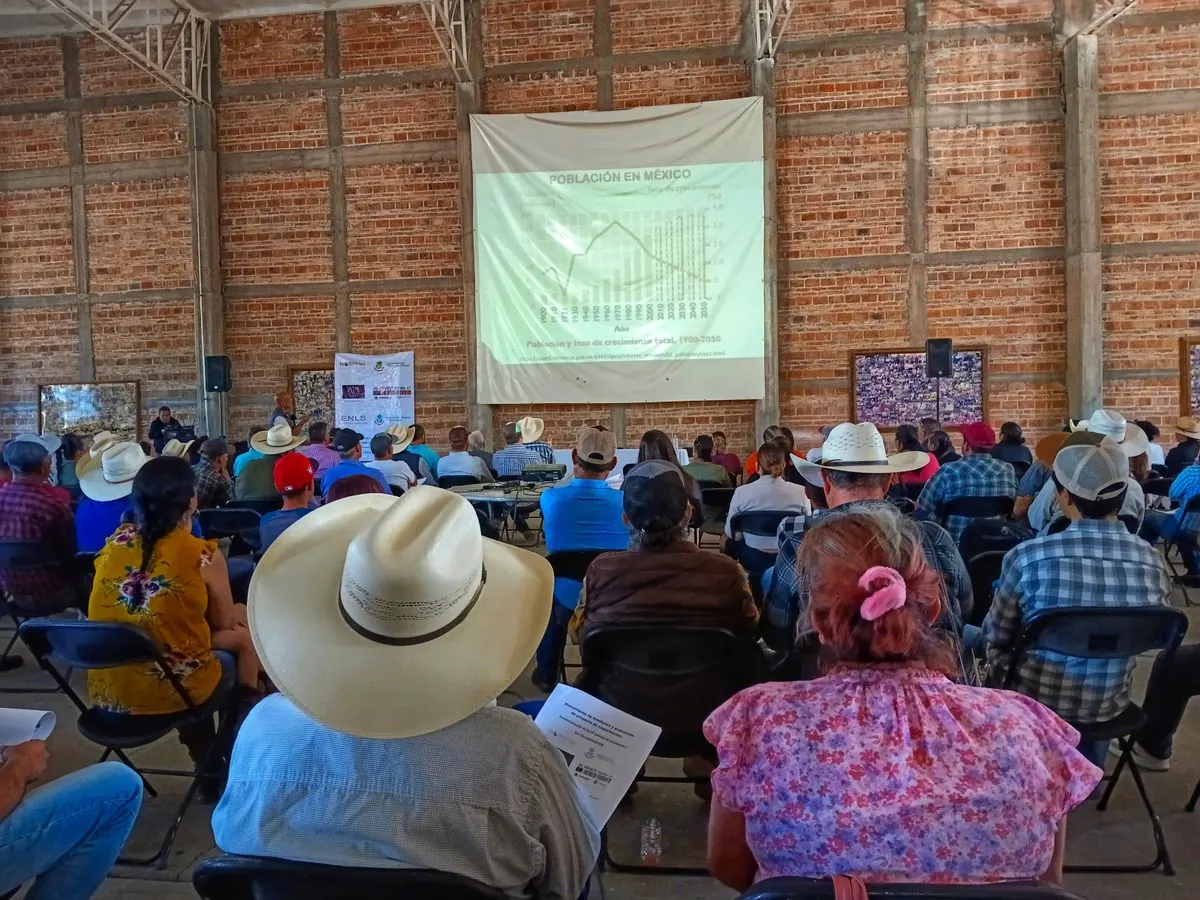
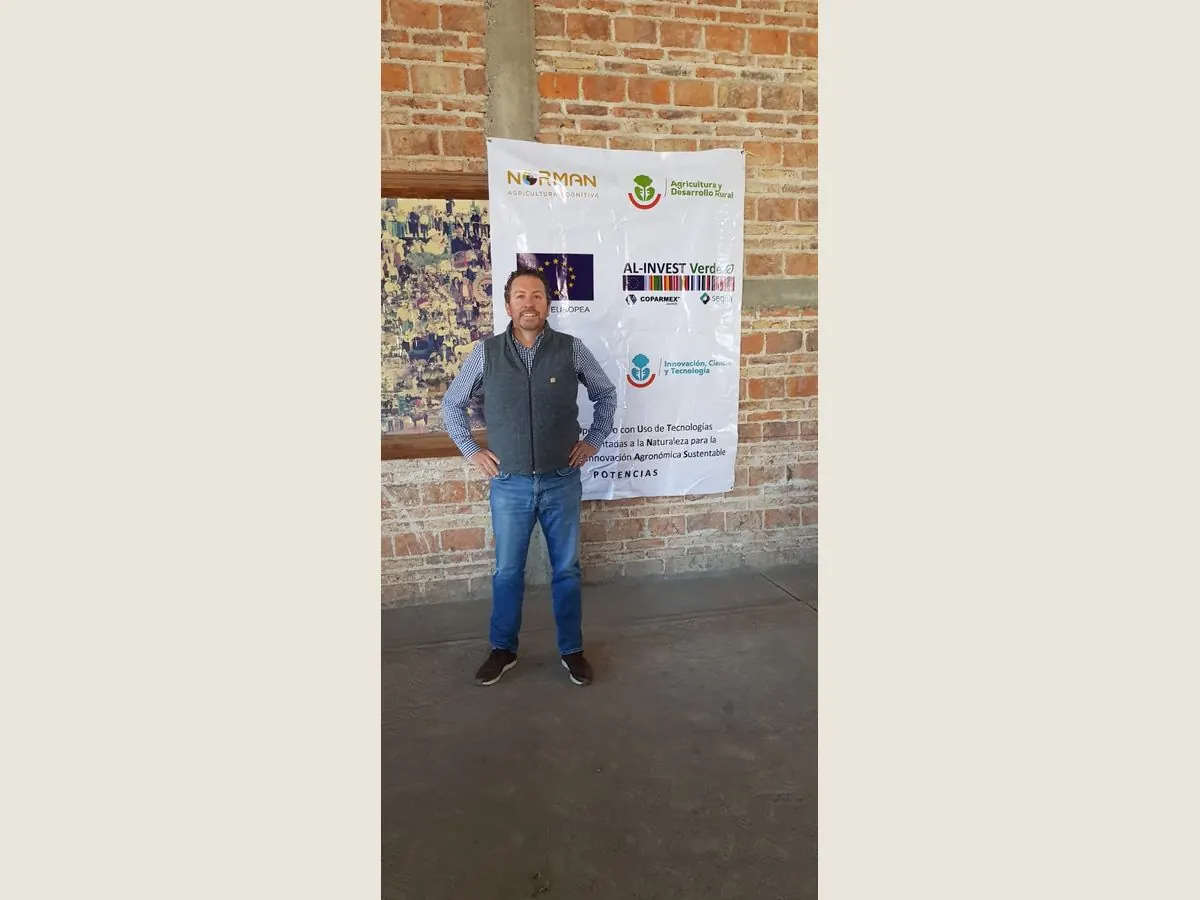
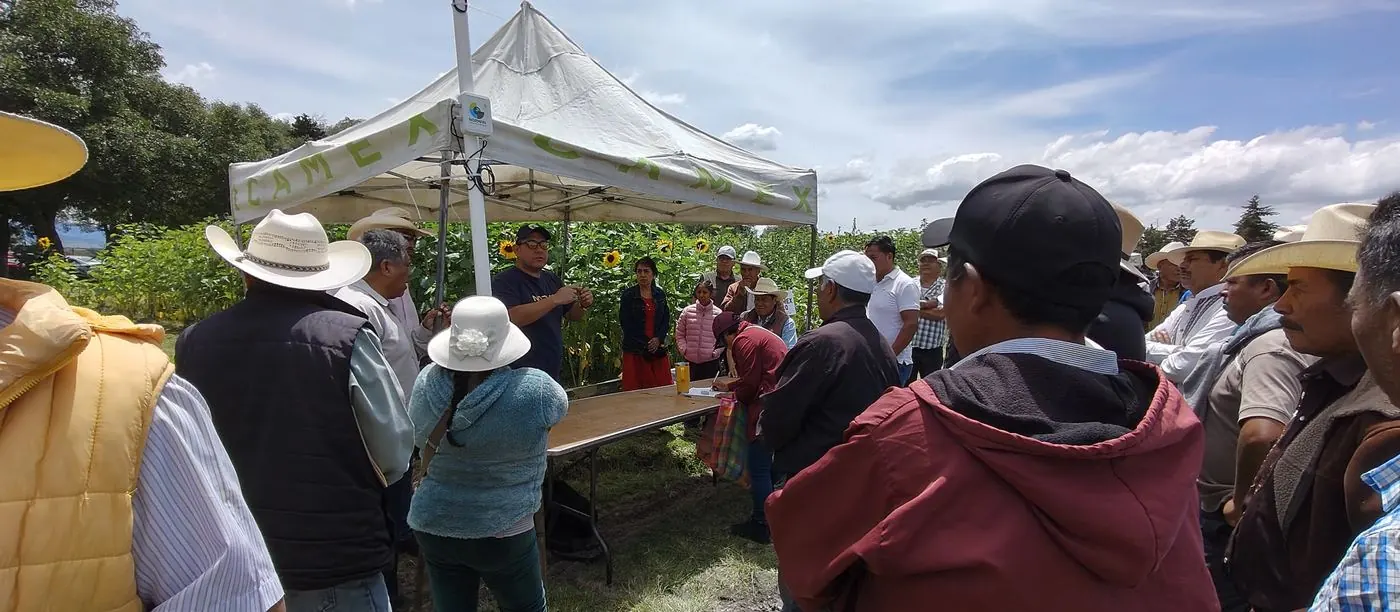
Jalisco, 2024–2025. Hands-on training program for farmers in regenerative agriculture and circular economy in the field, with Coparmex Jalisco and AL-INVEST Verde, a European Union program.
Where we work today
We work with two state governments, at two different scales.
State of Mexico · ICAMEX
Regional scale
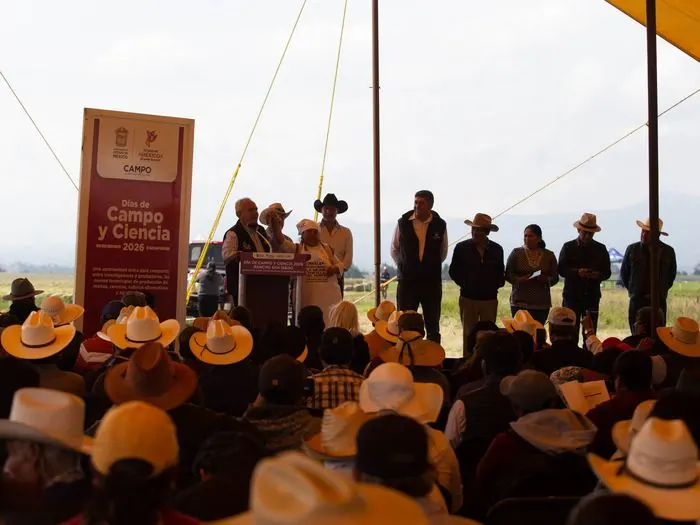
With the State of Mexico's Institute for Agricultural, Aquaculture and Forestry Research and Training, as part of the Study to Characterize the Soils and Weather of the State's Production Units, we measure in the field with our own stations at representative points of each soil type. With that data and lab analysis we built the state's Productive Capacity Index map, which the institute uses to guide its programs.
Jalisco · SADER
Farm scale
With the Jalisco Ministry of Agriculture and Rural Development, under the Annual Climate Change Program, every farmer in the program has a baseline, a Productive Capacity Index and in-season monitoring, with recommendations for their management. The ministry can see what changed on each farm.
Agronomy, field, technology and business at the same table
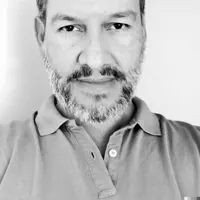
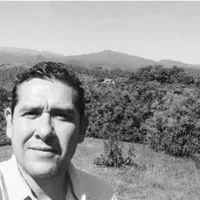
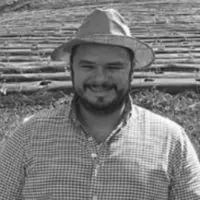
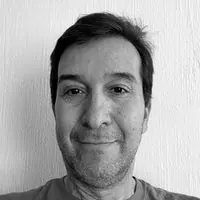
Miguel Trejo Luna
Head of Agronomy and Innovation · Chairman of the Board
What is measured, why, and what it means. Turns more than fifty years of field experience and agronomic science into the judgment AI lacks: what each data point means in the context of each farm.
Strategy, capital and partnerships. Sets Norman's direction and finds who to get there with: investors, lenders and business partners. Twenty years building technology companies, with one successful exit.
The bridge between the field and Norman. Works with farmers, researchers and government officials so they understand what field data says and make decisions with it. More than twenty years traveling the country's farmland.
The farmer's voice in the product. Makes sure every tool is designed from the perspective of the person who will use it on their land. Third-generation avocado grower.
The technology that makes every data point reliable. Turns more than thirty years of building technology into the platform and models that apply that judgment to each farm, without losing a single data point along the way.
From strategy to results. Makes sure what we sign gets delivered and that every program opens the door to the next market. More than twenty-five years selling technology.